 Johan Christian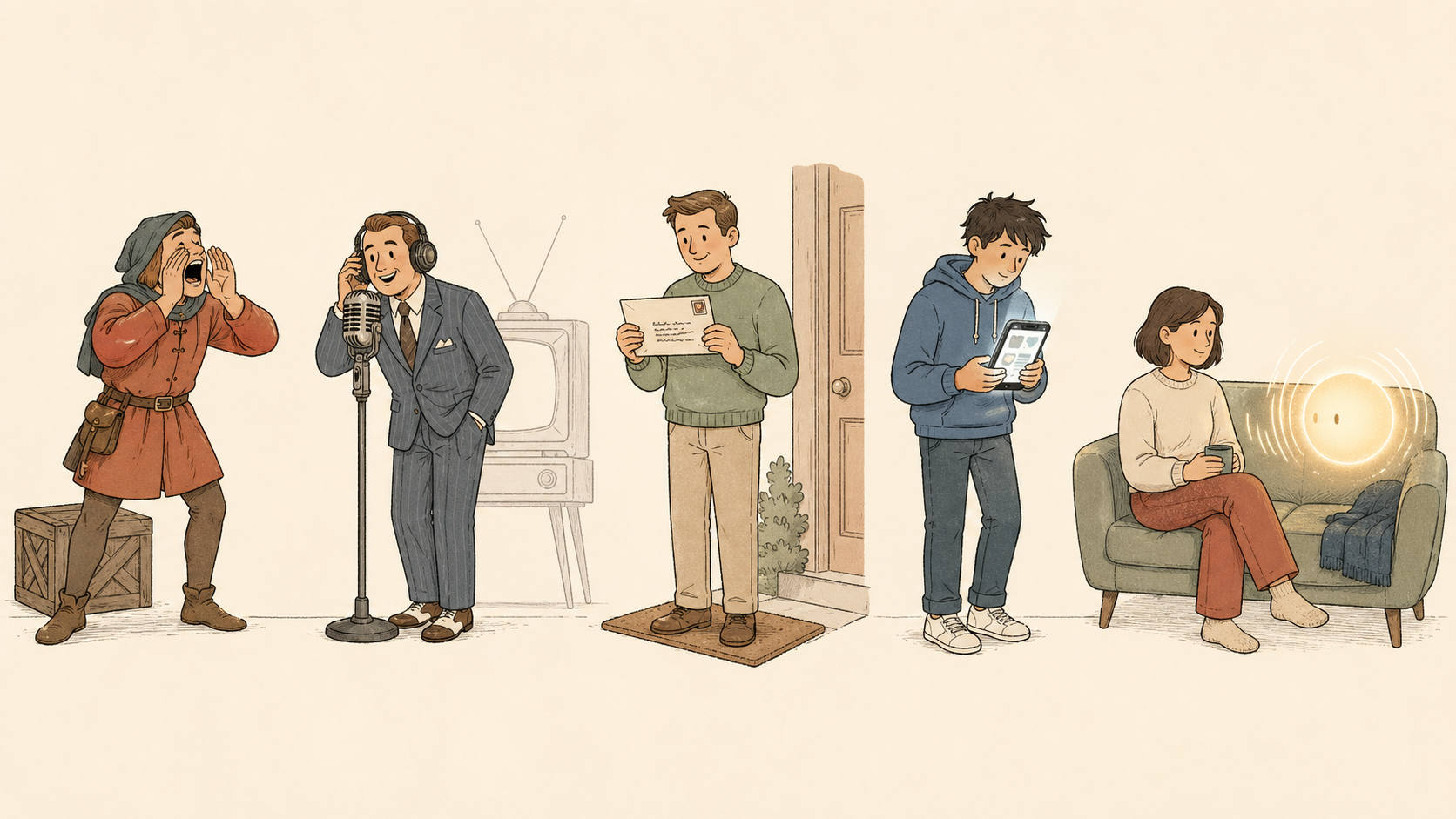
I've written the 2am cron jobs. I've named a file customers_final_v2_USE_THIS.csv and meant it.
I've watched a nightly extract land on an SFTP server, kick off an Automation Studio job, refresh a Data Extension, and launch a million emails the next morning, and I've felt the quiet satisfaction of a batch that ran clean. File-drop, batch-and-blast marketing. I know I'm not the only one.
Which is why a moment from a migration kickoff has stuck with me. Around the table: the Braze account exec, the implementation partner, the customer's CRM team, and the customer's data lead. Twenty minutes in, the data lead asks the question I would have asked.
"Where do we drop the nightly customer file?"
The implementation partner says, "We don't."
The data lead's pen stops moving. I recognised that pen-stop, because the first time someone gave me that answer, mine stopped too.
Nobody in that room was wrong. The question and the answer just come from two different eras. The SFTP question isn't really about file transfer. It's about what time the customer record is allowed to be wrong. A nightly batch says wrong by 24 hours is acceptable. An event-driven platform says wrong is a bug.
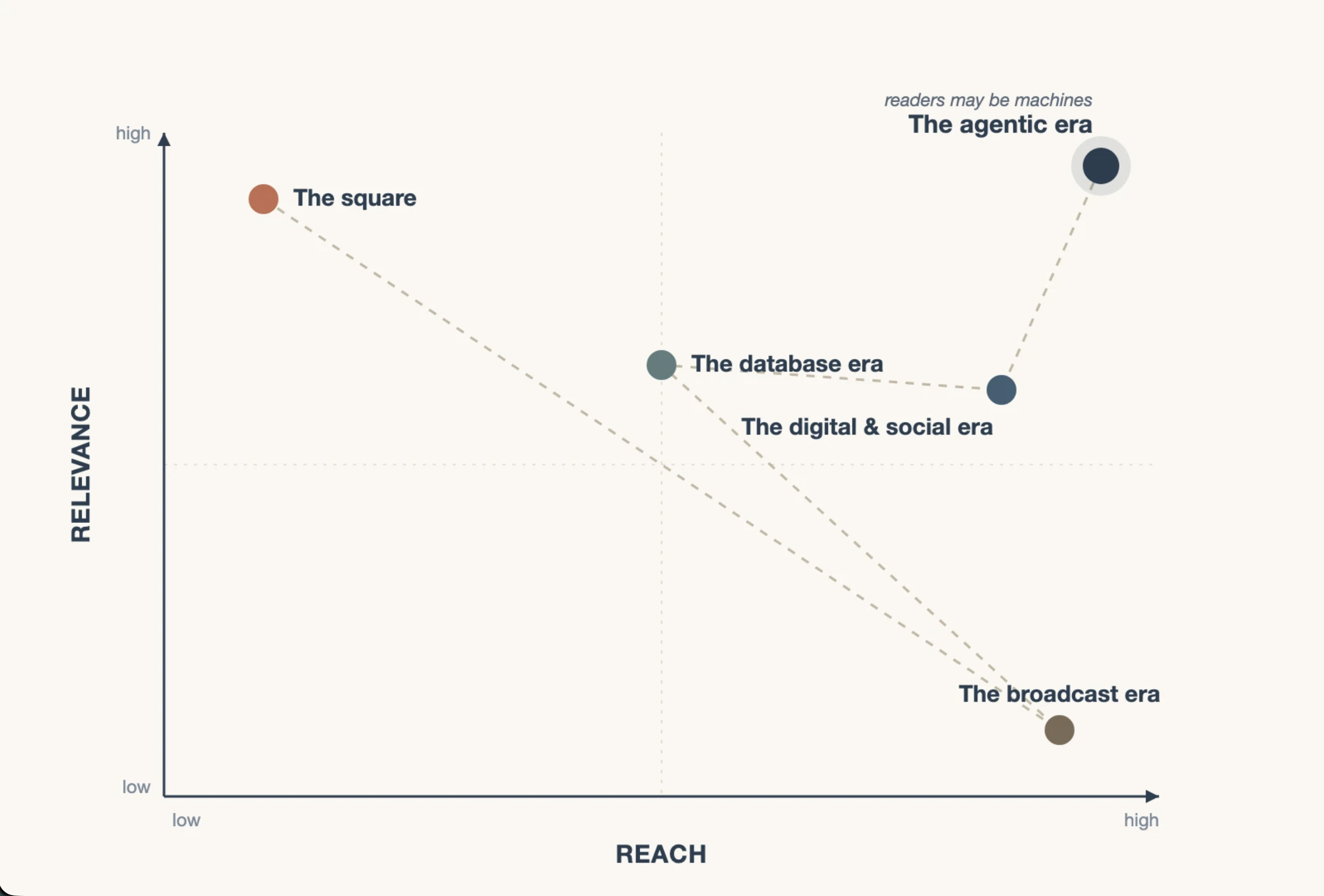
Underneath both, sits the oldest fight in marketing: reaching as many people as possible while saying something that actually matters to each of them. Every era of martech is a chapter in that fight, including the one that just ended and the one starting now.
The square (pre-1450)
Before the printing press, marketing was hand-to-hand. Market criers, painted shop signs, word-of-mouth between neighbours. You couldn't reach more people than could fit in your village square, but the people you reached knew you by name. Reach was tiny. Relevance was total.
The broadcast era (1450–1990s)
Then Gutenberg, and five hundred years of one-way mass media. Newspapers, posters, radio, TV. The first US TV commercial, for a Bulova watch in 1941, cost the company nine dollars in total. Each new medium added scale: a million readers, then a million listeners, then a million viewers all watching the same ad in the same minute. What collapsed was relevance. The 1960s housewife and the 1960s factory worker saw the same ad for the same washing powder. Reach became enormous; relevance became a rounding error.
The database era (1980s–2000s)
Then the customer record arrived, and it gets less credit than it deserves. Direct mail with your name on it. The first email campaigns. Early CRMs. For the first time, brands could speak to known individuals at scale.
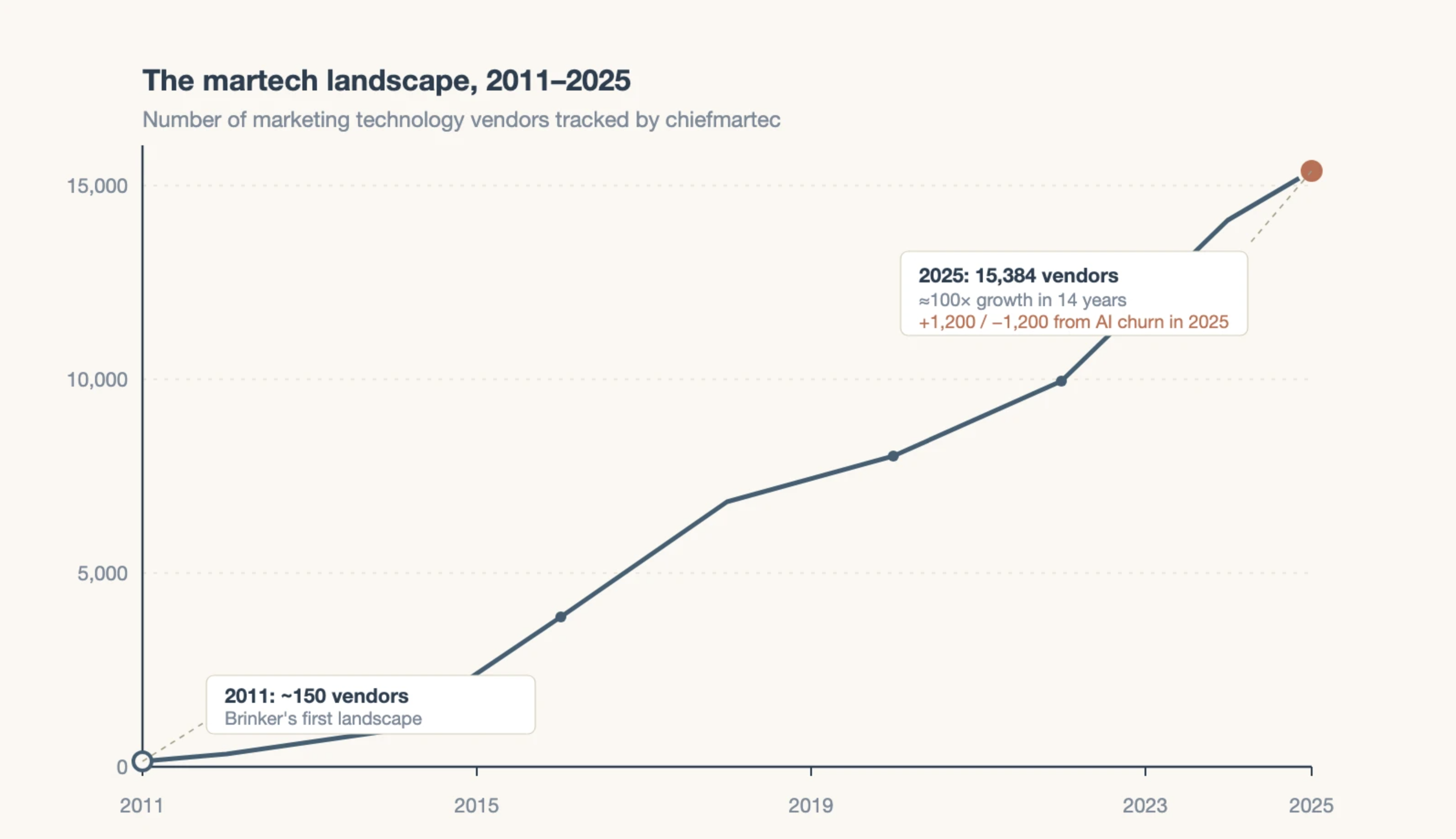
This is the era I was trained in, and it ran on files. Extract the customers overnight, drop the file, load it, send the campaign. The nightly batch was the architecture. Martech was born here as a category too; when Scott Brinker published his first marketing technology landscape in 2011, he counted about 150 vendors. Hold that number.
The digital and social era (2000s–early 2020s)
The internet, the smartphone, the social feed, the programmatic auction. The first clickable banner ad in 1994, Facebook ads in 2007. Brands could now reach billions and target them by behaviour, location and friend graph, and customers could talk back: click, like, complain, share. Brinker's 150 vendors passed 15,000 by 2025.
Reach hit its ceiling. Relevance improved but stayed fragmented across channels nobody could quite stitch together. And here's the part we rarely said out loud: under the hood, plenty of enterprise stacks were still running on my nightly file. The storefront was real-time. The customer record was wrong by up to 24 hours.
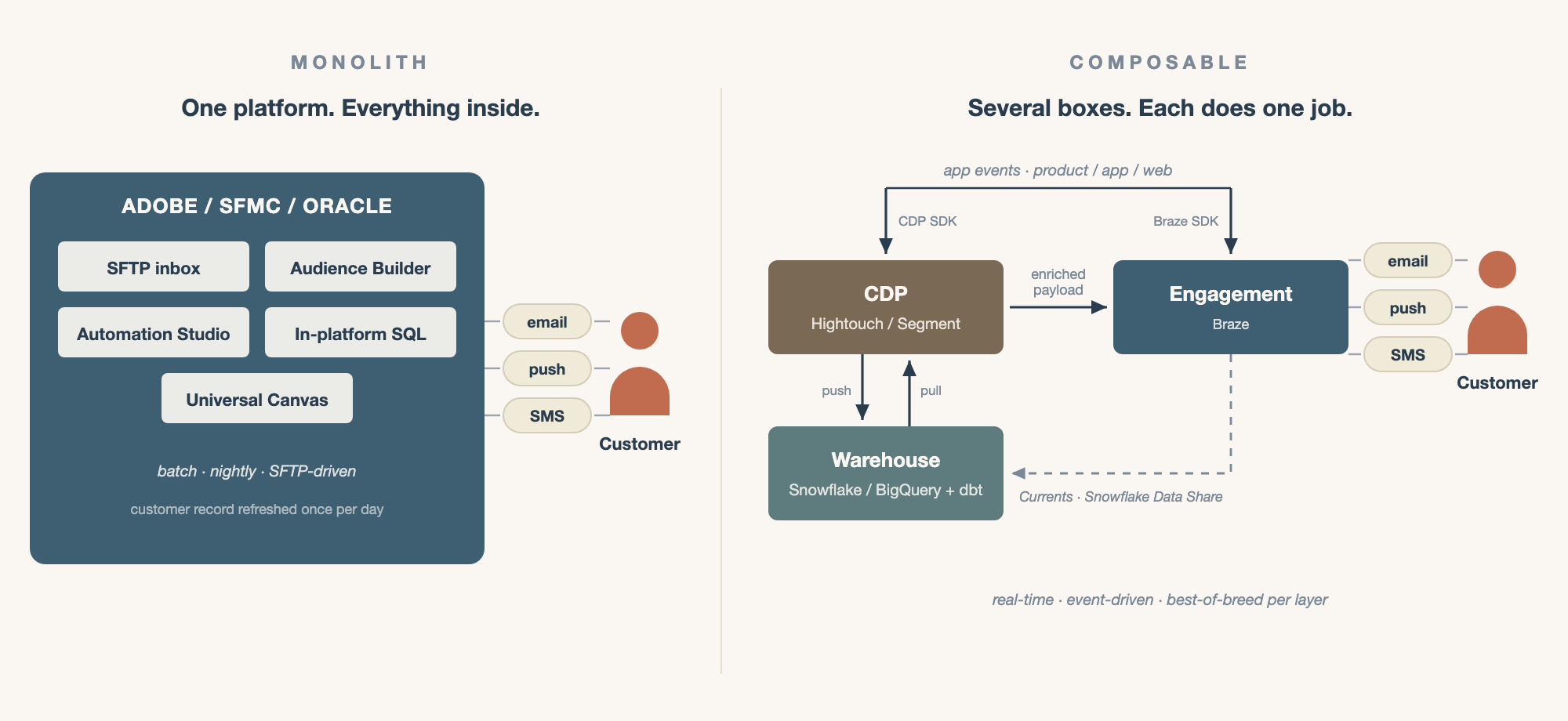
The monoliths froze
Nobody at Adobe, Salesforce or Oracle will say this part out loud either: the platforms that defined the last era aren't slow. They're frozen.
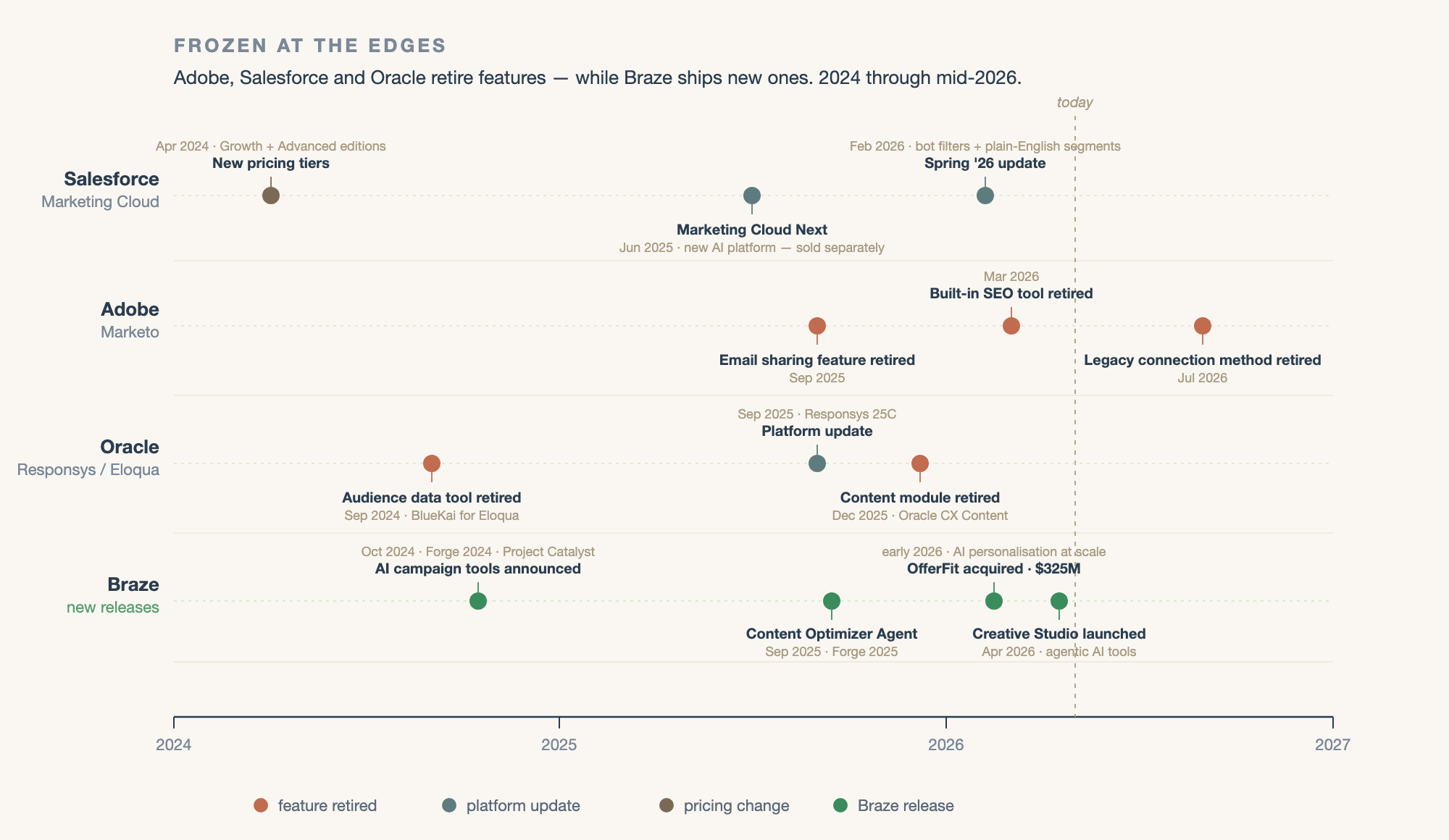
Oracle Responsys still ships releases; 25C went out in September 2025. But Oracle BlueKai for Eloqua reached end-of-life in September 2024, and Oracle CX Content, the content service that plugged into both Responsys and Eloqua, followed in December 2025.
Adobe hasn't formally killed Marketo either, but the SOAP API dies in July 2026, the SEO tool went in March 2026, Forward-to-a-Friend in September 2025.
Each removal is a footnote in a release note. None of them is a press release. Salesforce relaunched Marketing Cloud in 2024 with two new editions and restructured pricing; SFTP stayed exactly where it was.
Monoliths don't die. They get audited.
Meanwhile the composable, warehouse-centric stack won the analyst category: composable CDP is now a Gartner-tracked vendor segment, and the CDP Institute counted more than a quarter of CDPs supporting warehouse-centric architecture in January 2026. My beloved nightly file is still running in thousands of places. It's just no longer on anyone's roadmap.
The agentic era (2024 onwards)
And then, in the last couple of years, something quietly different. Generative AI started writing the message. Then it started picking the channel and the moment. And now it's starting to read the message for the customer. Spam filters that triage on intent. Shopping agents that compare and buy. Assistants that book the flight, switch the energy contract, cancel the gym membership.
For the first time, the audience on the other end of marketing is sometimes not a person.
Scott Brinker reckons the centre of gravity is shifting from "AI for marketers" to "AI for customers". Forrester predicts a third of B2C brands will erode customer trust in 2026 by deploying AI agents in contexts they aren't ready for, and that a third of B2B payment workflows will be running on autonomous agents by the end of the year.
Here's my own prediction: by 2028, your most valuable customer relationship won't live in your CRM. It will be an API endpoint inside your customer's AI agent. The new loyalty program is an integration. Brands whose catalogue, pricing and consent framework are legible to the customer's agent, through protocols like Anthropic's Model Context Protocol or Google's Universal Commerce Protocol, will surface. The rest won't be delisted. Just unread.
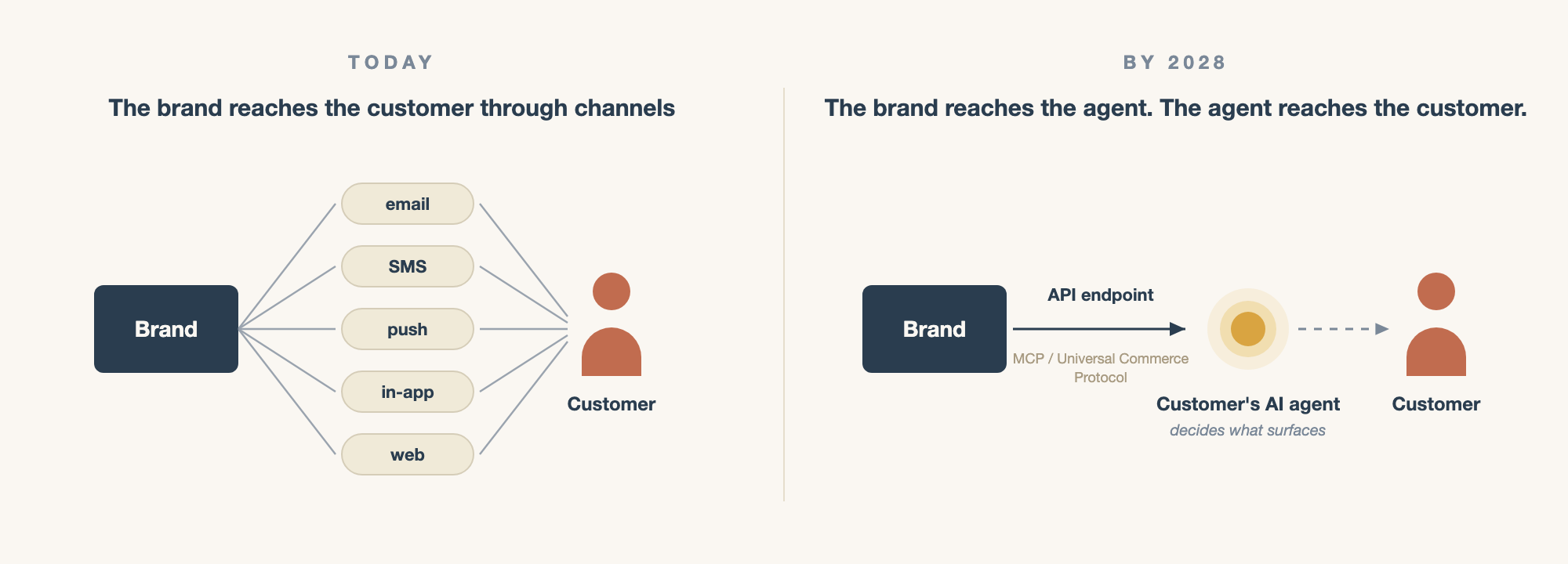
This is the first era where reach and relevance can finally scale together. It's also the first era where the reader might be a machine.
What the next-era marketer actually needs
A short, opinionated checklist:
- One orchestrated journey across email, SMS, push, in-app and WhatsApp, not six disconnected campaigns.
- React in seconds. Real-time, event-driven triggers are the baseline now, not a luxury.
- Personalisation without writing 10,000 variants: generative content paired with decisioning that picks the message, channel and moment.
- Proof of what drove the lift: holdouts, incrementality, numbers a board can audit.
- The throughput to handle AI-agent traffic without the queue collapsing.
Where Braze and AI meet
That list is also why "we don't" was the right answer in that kickoff.
Braze was built event-first: the front door is events, posted to /users/track, in real time, by the systems that produce them. (A file-based side door exists for batch loads these days. It's a supplement, not the architecture)
At the default ceiling that endpoint accepts roughly 75,000 attribute and event updates per second, and Braze tunes it higher for enterprises that need more. Currents streams activity back out to your data stack every five minutes.
The AI layer keeps growing on top: Forge 2025 introduced the Content Optimizer Agent, and the OfferFit acquisition pointed the platform squarely at agentic personalisation.
When every customer's AI agent is firing structured events at your stack, that's the architecture you want catching them. Of the platforms we work with most days at Composed, Braze is the strongest contender for the agentic era. We'd say that even if we weren't a Braze partner.
The job hasn't changed
Every generation of marketers thinks the new tools are the disruption. They're not. They're the medium. The disruption is the same problem we've been chasing since the village square: reach more people, and still say something that matters to each of them.
The shouting has changed. The job hasn't.
And go on, tell me I'm not the only one who misses the nightly file drop, just a little.